History
Welcome to the Vall d’Alcalà: Heart of the Mountain, Cradle of History
Discovering the Vall d’Alcalà is embarking on a fascinating journey through time. From the first Paleolithic hunter groups, 90,000 years ago, to becoming the last stronghold of Andalusi resistance under the legendary leader Al-Azraq, our valley has been the stage of pacts, battles, and cultures that have left an indelible mark.
Today, that legacy lives on in our Morisco depopulated villages, in the architecture of our snow wells, and in the hospitable spirit of a people who were reborn with the Mallorcan repopulation in the 17th century.
We invite you to explore our trails, wander through centuries-old farmsteads, and discover the history of a land that, among peaks and ravines, has preserved its purest essence.
History of the Vall d’Alcalà: The Last Bastion of the Mountain
The Vall d’Alcalà is not just a natural area of great beauty; it is a living testimony of prehistory and a key stage in Valencian medieval history.
1. Prehistory: The Valley’s First Inhabitants
The Vall d’Alcalà is one of the areas with the oldest human presence in the Valencian region. Archaeological remains show that the valley has been inhabited for more than 90,000 years.
The First Inhabitants
At Barranquet de Beniaia, stone tools from the Lower Paleolithic (about 90,000 years ago) have been found, evidence of the arrival of the first human groups.
Thousands of years later, in the Cova del Pelegrí, cave paintings —including a wild goat— were created, dating back approximately 21,000 years.
An Exceptional Site: Tossal de la Roca
The Abric del Tossal de la Roca is one of the most important prehistoric sites in the Valencian Community. It was occupied for over 6,000 years (between 14,000 and 7,500 years ago).
Excavations have uncovered stone and bone tools, a harpoon almost unique in the Iberian Mediterranean, and small artworks engraved with animal figures. The artifacts are preserved at the Archaeological Museum of Alicante (MARQ).
Rock Art and Early Communities
The valley also preserves examples of Levantine Art, such as a goat figure at Racó del Condoig or a schematic human figure at Barranc de la Gleda.
In the Cova del Passet, near the Barranco del Girona, a collective Neolithic burial cave (around 3,000 years old) was discovered, containing pottery, tools, ornaments, and human remains.
Bronze Age and the Iberians
During the Bronze Age, settlements appeared in elevated locations such as Penya de la Retura and Tossal de la Roca.
Later, between the 5th and 1st centuries BCE, the Xarpolar plateau hosted an important Iberian settlement, inhabited by the Contestani Iberians. Weapons, decorated pottery, and coins were found here.
So far, no remains from the Roman period have been discovered in the valley.

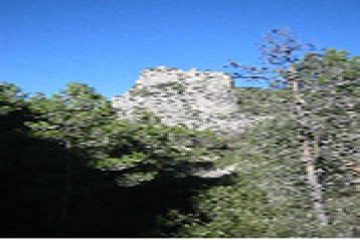
tossal de la roca
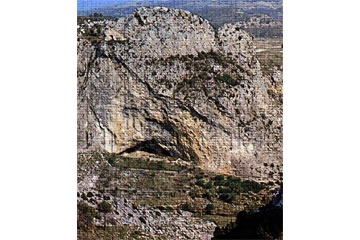
abrig del tossal de la roca
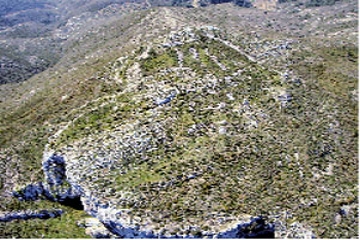
Iberian settlement El Xarpolar
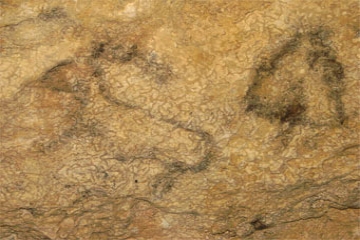
Levantine art exhibition at the Condoig
2. Andalusi Splendour and the Figure of Al-Azraq
In the 12th century, Alcalà was the center of a valiyah dependent on the Taifa of Valencia. The valley consisted of eight alquerías: Benibullfasem (today Jovada), Atzuvieta, Roca, Benialí, Benixarco, Beniaia, Queirola, and Benissili.
From here, Al-Azraq challenged the advance of James I of Aragon’s troops. After the Pact of Pouet (1245) and the subsequent Mudejar revolts, his death in 1276 in Alcoy marked the end of Andalusi resistance in the Alicante mountains.
Al-Azraq and the Vall d’Alcalà: heart of Andalusi resistance
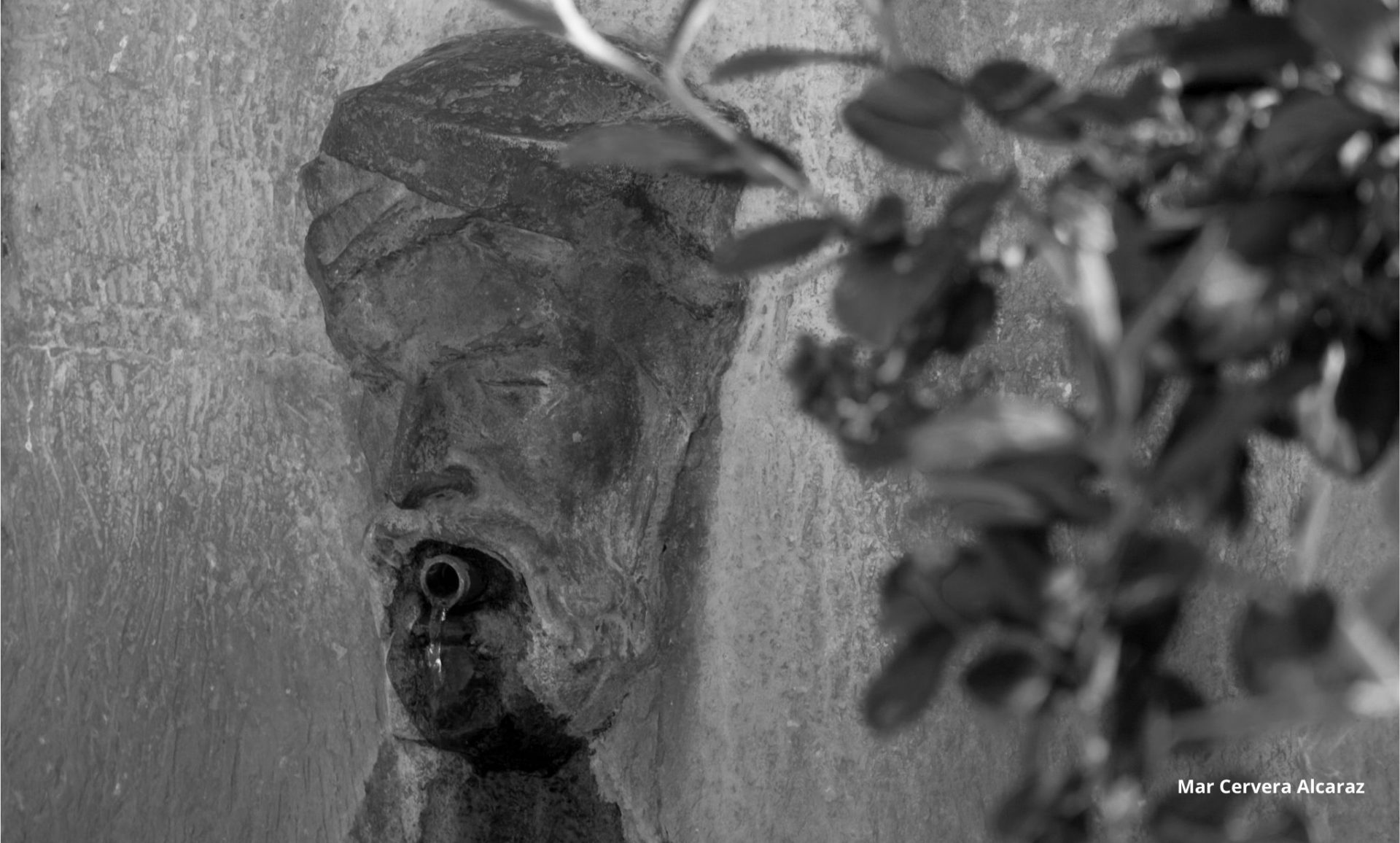
Al-Azraq (13th century), whose name means “the blue-eyed,” was the main medieval figure of the Vall d’Alcalà. This mountainous valley was not only part of his domain but also one of the main stages of Andalusi resistance during the feudal advance in the conquest of the Kingdom of Valencia.
Lord of strategically located castles and fortresses, Al-Azraq knew this rugged territory intimately and used it as a space for defense and political organization. From here, he forged pacts, alliances, and uprisings during a period of major power transformation in the region.
In 1244, a key agreement was signed: the Treaty of Pouet, between Al-Azraq and James I. This historically significant document regulated the handover of certain fortresses and established a truce between the two sides. Preserved in full and written in both Arabic and Romance, it is the first fully preserved bilingual medieval truce treaty. It stands as an exceptional testimony to political and legal dialogue between two cultures in a time of profound change.
However, coexistence was fragile. Tensions led to new Mudejar revolts in 1248 and 1276, with the Vall d’Alcalà and its surroundings serving as a key focus of resistance.
Al-Azraq’s figure, halfway between history and popular tradition, is deeply linked to the historical identity of the Vall d’Alcalà. His legacy symbolizes a decisive period that shaped the valley’s fate and its medieval memory.
3. From the Barony to the Expulsion of the Moriscos
After the Christian conquest, the valley became part of the Barony of the Castle, Honor, and Vall d’Alcalà, linked to the Català de Valeriola lineage and later to the County of Real and the Duchy of Villahermosa.
For more than three centuries, the Morisco population preserved its culture and traditions until the expulsion in 1609, which left the valley almost entirely depopulated.
4. Repopulation and the Modern Age
The valley was repopulated mainly by settlers from the Balearic Islands. Settlements like Jovada, Beniaia, and Benissili were consolidated, while others, such as La Roca and La Queirola, were abandoned and are today some of the best-preserved Morisco depopulated villages in the province.
In the 19th century, Benissili became part of the Vall de Gallinera.
5. The 20th Century: The Challenge of Depopulation
Like many inland municipalities, the Vall d’Alcalà suffered rural exodus. From over 600 inhabitants at the start of the 20th century, the population today is around 200.
Today, the municipality focuses on preserving its archaeological, historical, and landscape heritage as the foundation for a sustainable development model that turns the valley into an open-air museum.